
Nucleus / Version 3
Nucleus mesh radio
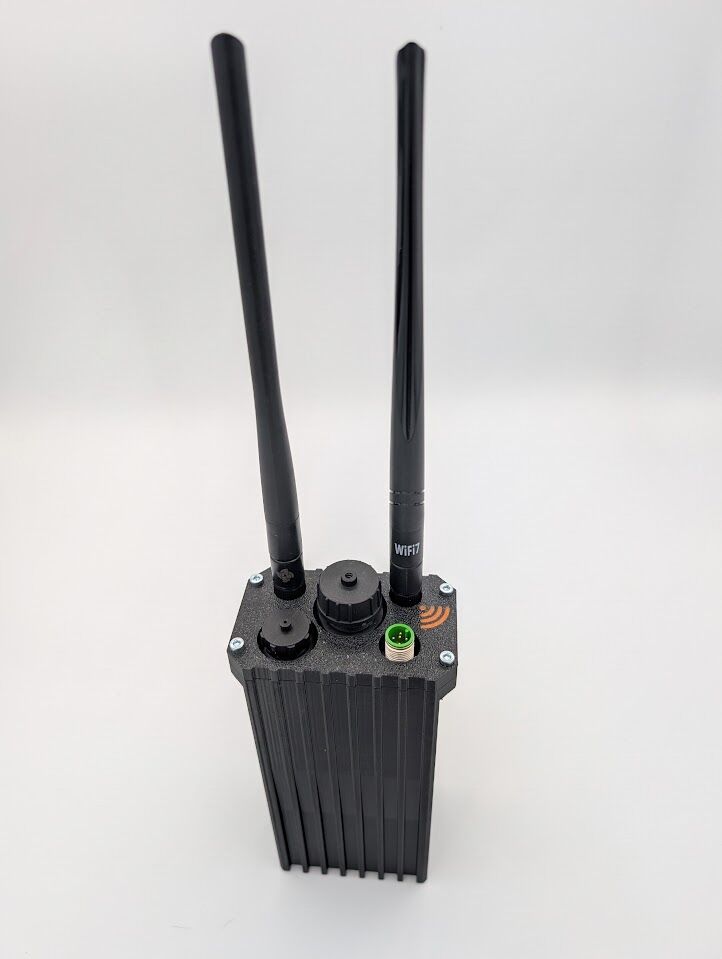
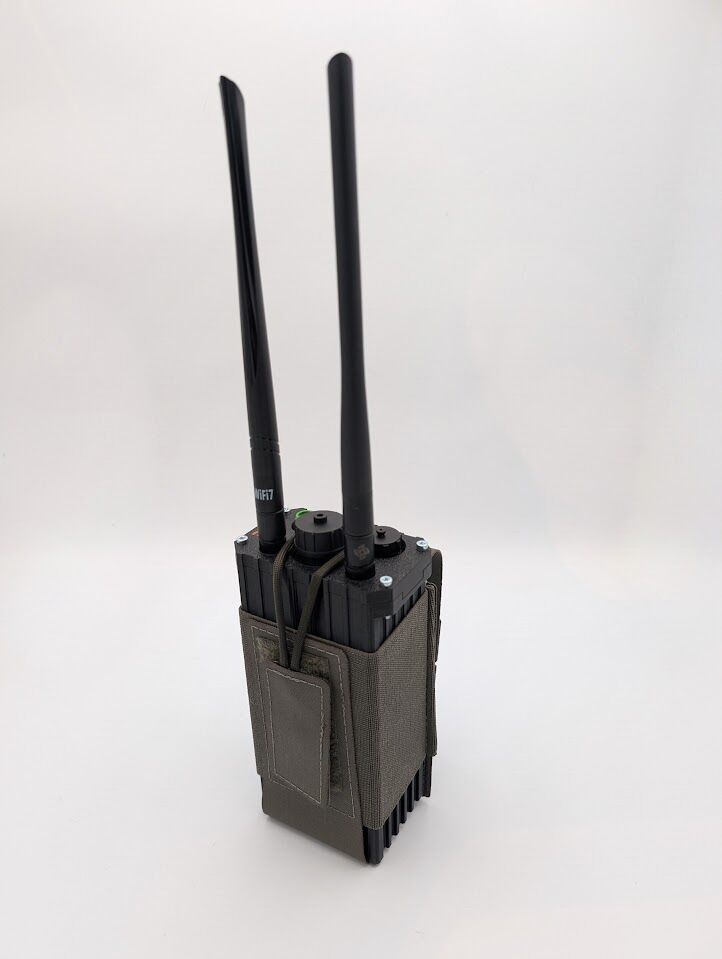
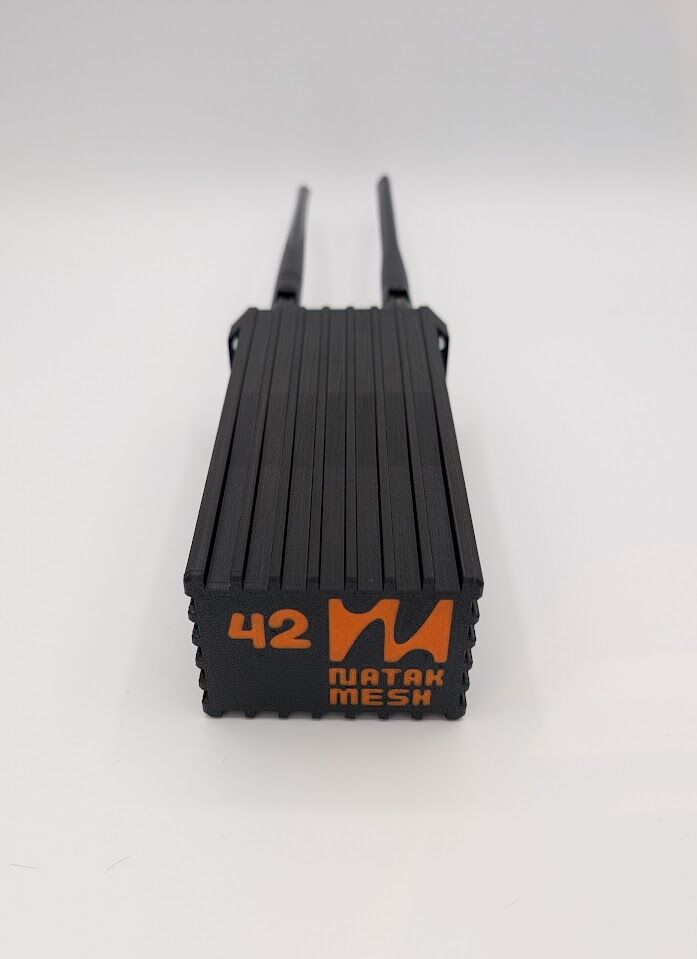
Nucleus is a portable mesh networking node. It carries ATAK, voice and messaging over a 2.4 GHz WiFi mesh, and position reports and text messages over a long-range LoRa radio.
Nodes form a mesh automatically when powered on. The network requires no base station, internet connection or cloud account. Phones connect to the access point on any node and reach every device on the mesh.
- 2.4 GHz WiFi mesh
- 500 mW
- LoRa
- 915 MHz · 1 W
- Power
- 5 V · 3 W typ.
- Throughput
- ~30 Mbps
01Overview
Radio Networks
WiFi Mesh
A self-forming WiFi mesh in the 2.4 GHz band, encrypted with WPA3. It carries ATAK, video and push-to-talk voice, at approximately 30 Mbps between adjacent nodes.
LoRa
A 1 W LoRa radio running Meshtastic. It carries position reports and text messages over long distances, so devices beyond WiFi range remain on the network. It is compatible with standard Meshtastic devices.
02Software
Software
Every Nucleus runs V3 OS, an open-source operating system based on Debian Linux. All settings are managed through a web interface served by the node.
| Service | Function | Default |
|---|---|---|
| WiFi mesh | Carries ATAK and all other IP traffic between nodes. | On |
| Meshtastic | Runs the LoRa radio. Carries ATAK position reports and chat over LoRa. | On |
| Text messaging | A single inbox. Messages are sent over both WiFi and LoRa. | On |
| Push-to-talk voice | Voice over the WiFi mesh, from a phone browser or a hardware PTT. | On |
| Reticulum | Encrypted messaging and networking over the WiFi mesh and Ethernet. Extends over LoRa with an optional USB-C RNode module. | On |
| Internet gateway | Shares an internet connection with every device on the mesh. | On |
| Firewall | Blocks unused services. | On |
| Tailscale | Remote access to the node over the internet. | On |
| HaLow mesh | WiFi mesh in the 915 MHz band through an optional USB-C HaLow module. | Requires HaLow module |
| TAK server | TAK Server or OpenTAKServer running on the node. Installed separately. | Off |
A dedicated TAK server for teams with an existing network is available separately as the ION TAK Server.
03Ports
Ports
| Port | Use |
|---|---|
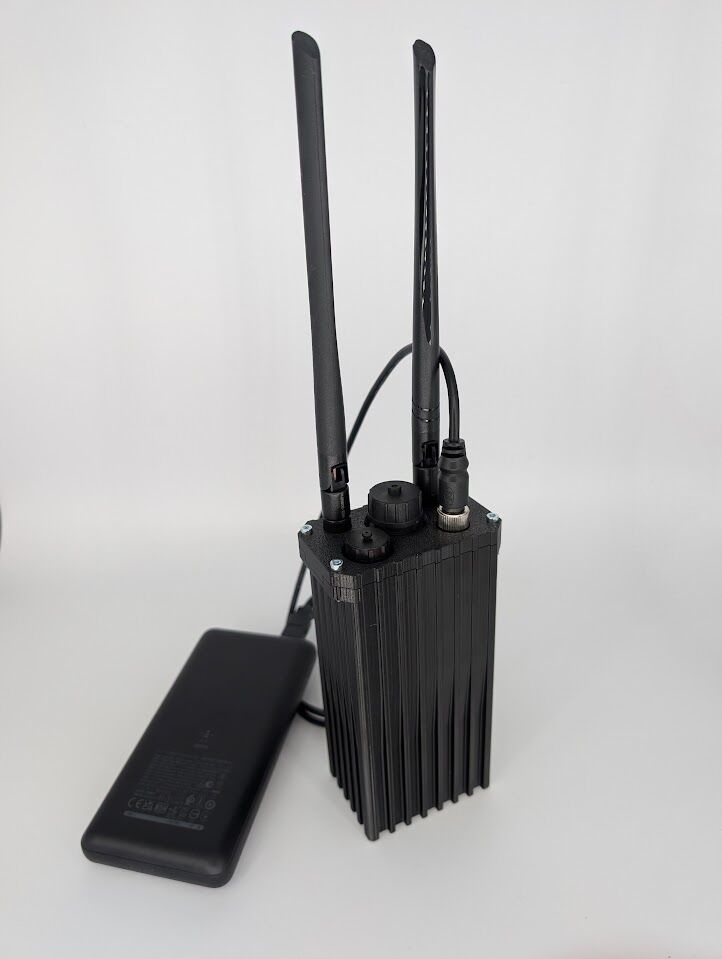
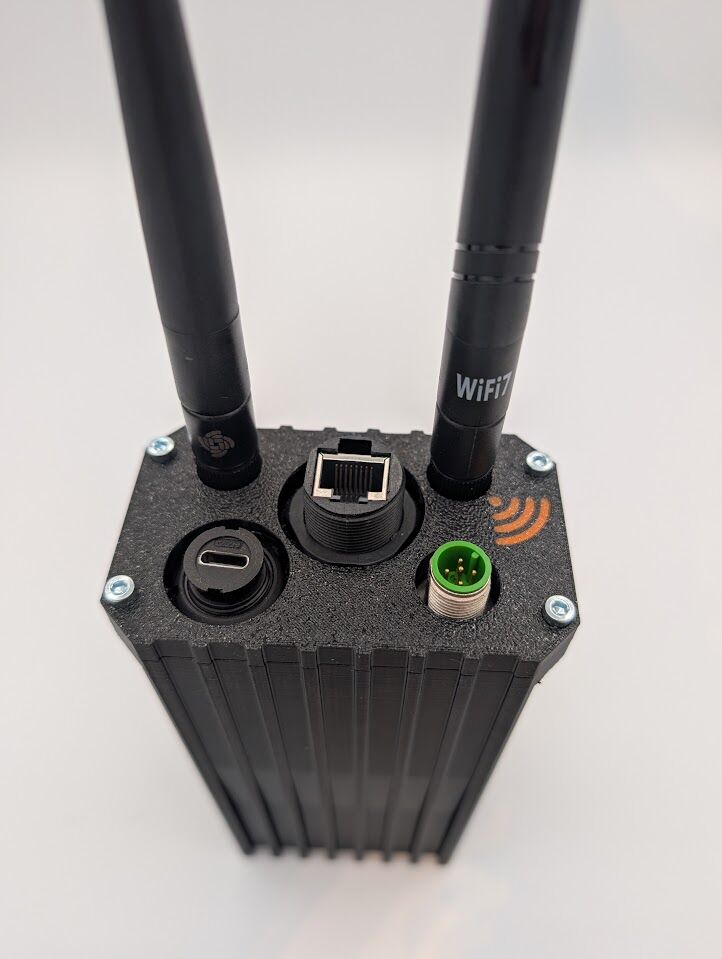
| Antennas | Two RP-SMA connectors, WiFi and LoRa. |
| Ethernet | Internet connection or wired devices. |
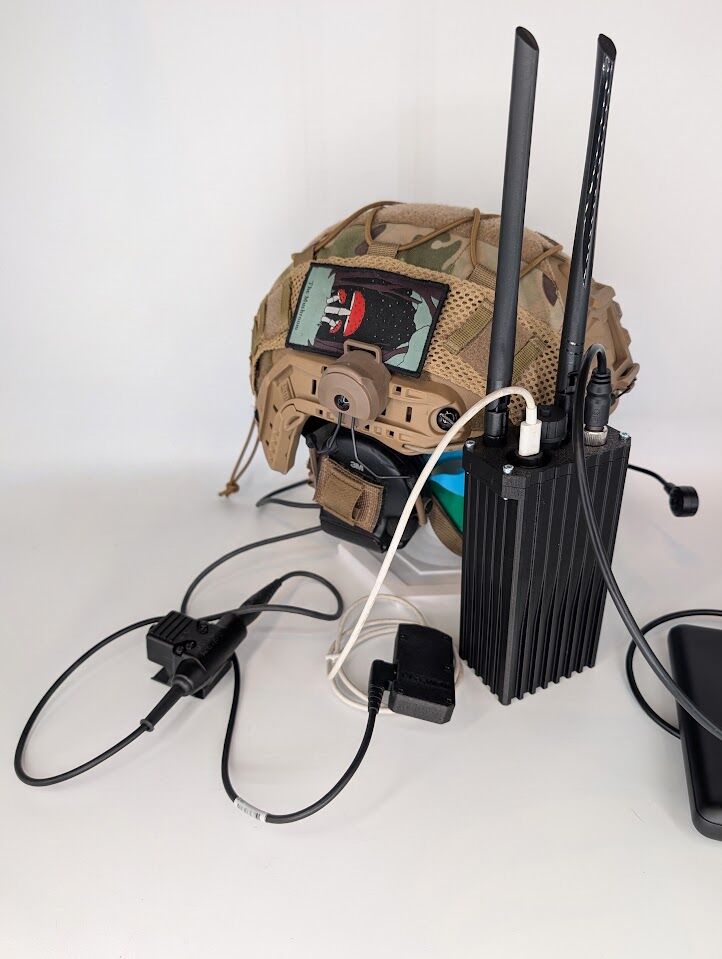
| USB-C | Expansion modules: Reticulum RNode, HaLow radio, hardware PTT. |
| Power | 5 V, M12 connector. |
Each radio can be enabled or disabled from the web interface.
04Specifications
Specifications
| 2.4 GHz WiFi mesh | 2.4 GHz ISM band (2.400–2.4835 GHz) |
|---|---|
| WiFi conducted power | 500 mW |
| LoRa | 915 MHz ISM band (902–928 MHz) |
| LoRa radio | SX1262 (RAK13302) |
| LoRa conducted power | 1,000 mW |
| Access point | 5 GHz band |
| WiFi antenna | 5 dBi |
|---|---|
| LoRa antenna | 5 dBi |
| Connector | RP-SMA |
| Platform | Raspberry Pi 4 |
|---|---|
| Operating system | V3 OS, Debian 13 |
| Ethernet | 10/100/1000 Mbps, RJ45 |
| USB | USB-C, USB 2.0 |
| Input | 5 V DC, M12 |
|---|---|
| Average current | 0.6 A |
| Typical consumption | 3 W |
| Battery | External, USB power bank |
| Enclosure | PCTG |
05Range
Range
The coverage of a mesh network depends mainly on node count and placement, not on the transmit power of any single node. Coverage is extended by adding nodes. All figures below are single point-to-point links measured during field tests.
| Conditions | Measured |
|---|---|
| Line of sight, 50 m elevation difference | 5 km |
| Ground level | 1 km |
| Obstructed by buildings or dense foliage | 100 m |
| Conditions | Measured |
|---|---|
| Elevated, test 1 | 22 mi, link maintained |
| Elevated, test 2 | 8 mi, link maintained |
| Maximum range | Not determined |
06Source Code
Source Code
V3 OS is published on GitHub under the MIT license. All software it depends on is open source.
- V3 OSNode operating system. Nodes install updates from this repository through the web interface.
- Operator manualConfiguration and operation of the node.
- ReticulumNetworking stack used by Sideband, MeshChat and NomadNet.
- MeshtasticFirmware for the LoRa radio.
- OpenTAKServerOpen-source TAK server. Can be installed on a node.
- ATAKAndroid TAK client. Free of charge; requires a tak.gov account.
07Ordering
Ordering
Each Nucleus ships with two antennas, a USB-C cable and an M12 power cable. A mesh network requires at least two nodes.