Natak Mesh
Natak Mesh
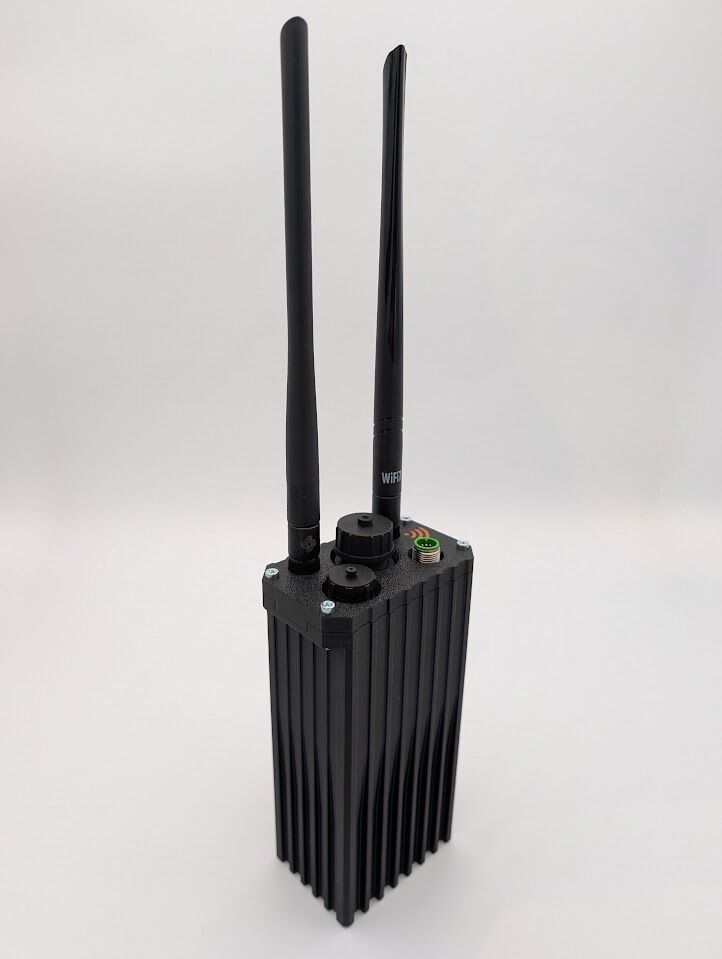
Natak Mesh develops grid-independent communication systems built from commercial off-the-shelf hardware and open-source software. The current platform, Nucleus, is a Linux-based mesh networking node that operates without external infrastructure.
01Design Principles
Design Principles
Nucleus contains no proprietary hardware or software, and does not depend on any vendor-operated service.
- Commercial off-the-shelf hardware
- Standard single-board computer, radio and power components
- Open-source software
- MIT-licensed operating system based on Debian Linux
- Built on open protocols, including Meshtastic, Reticulum and Babel
- User-modifiable
- Each node is a standard Linux system, and the operator can modify or extend it
- Rapid iteration
- Software updates are published to a public repository and installed directly on nodes
02RF Links
Grid-Independent RF Links
Nucleus nodes establish two RF networks simultaneously: a 2.4 GHz WiFi mesh for high-bandwidth IP traffic, and a LoRa mesh for low-bandwidth messaging over long distances. Both networks are self-configuring. Neither requires cellular service, an internet connection or fixed infrastructure.
03Private Operation
Private Operation over Existing Networks
Where an internet connection is available, it can serve as a carrier without exposing the network. Tailscale provides an encrypted overlay network between nodes and operator devices. Reticulum links separate networks over any IP connection, with end-to-end encryption.
04Network Expansion
Network Expansion
Every Nucleus runs a Reticulum transport instance. Reticulum operates over any combination of physical media, so a single node can be the starting point of a complete private network spanning WiFi, LoRa, Ethernet, fiber and internet links. Reticulum routes traffic across these links automatically.